Completed
A 50-state directory ranking the top public high school football programs in every state over the 2021-2025 seasons, plus a national top 40.
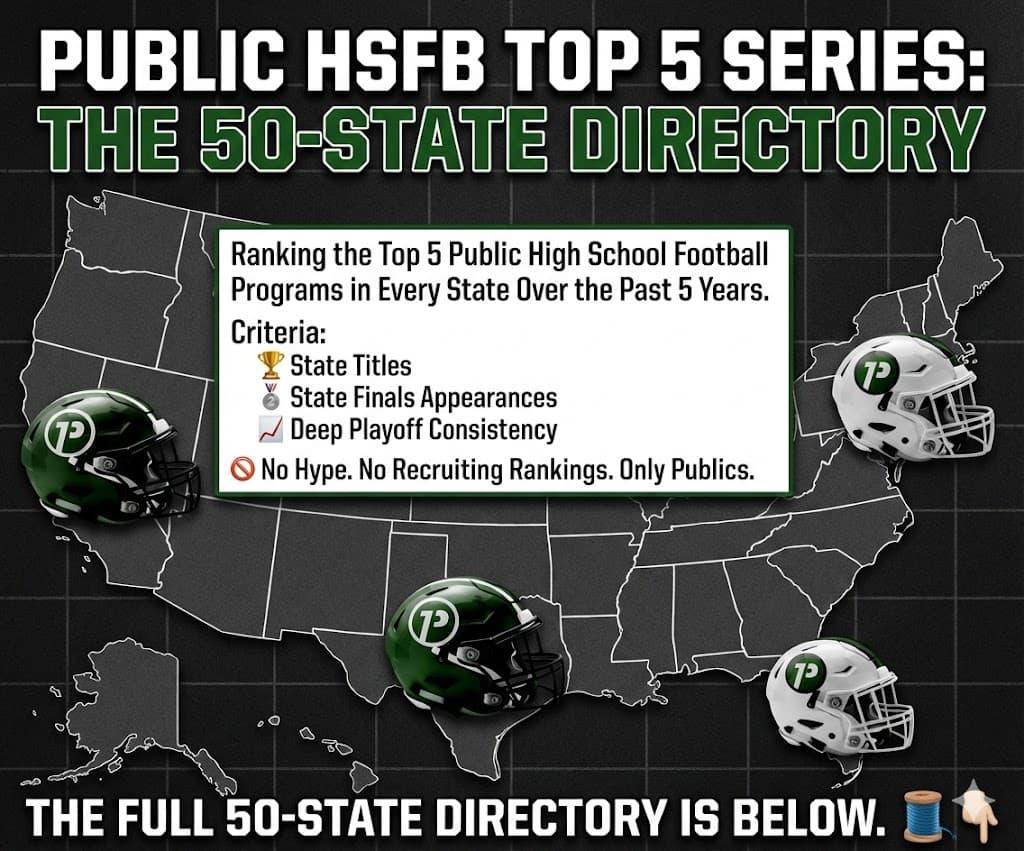
Start: 2/24/2026
Status: Completed
54 articles

Series
In Alabama, high school football isn't just a hobby; it’s a meat grinder. Over the last five seasons, these five public programs have separated themselves from the pack.

Series
In the world of Alaska high school football, the "Last Frontier" isn't just a nickname, it’s a description of the grit required to survive the postseason. While the bigger schools in Anchorage often grab the headlines, the last five years (2021–2025) have been defined by two D-II powerhouses that have effectively built a wall around the state championship game.
Series
Arizona utilizes the “Open Division” format for its playoffs, and it's a very clean system. Regardless of what class you’re in, if you’re one of the top 8 ranked teams in the state (determined by the AIA power rating system), you qualify for the Open Division bracket. That tournament is what determines the true state champion.
Series
Arkansas is a state where football is woven into the community's DNA. Like most of the country, the landscape is defined by traditional classifications ranging from 2A up to 7A. While the presence of private school powerhouses often complicates the trophy count in the mid-sized classes, the public schools in Arkansas have maintained a level of dominance that rivals any state in the South.
Series
California high school football is the most complex landscape in the country. With 10 sections and a bowl system that often sees the best public schools "bottlenecked" by national private school juggernauts, evaluating these programs requires more than just counting rings.
Series
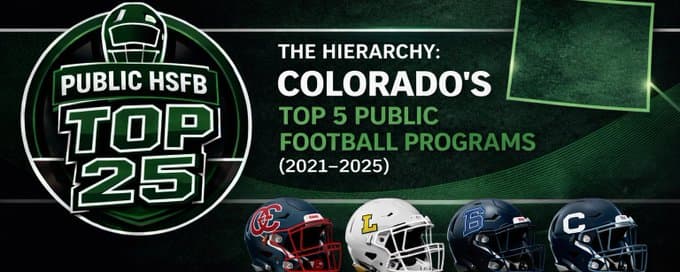
The landscape of Colorado high school football is defined by legendary coaching and disciplined "ground-and-pound" identities. In a state where one or two programs often hoard the hardware, these five public schools have separated themselves through championships and sustained dominance at the highest levels.

Series
Connecticut high school football runs through the CIAC’s six-division playoff system — LL, L, MM, M, SS, and S — with classifications determined by enrollment. Each class crowns its own state champion annually, and sustained championship production is the only metric that separates contenders from dynasties.
Series
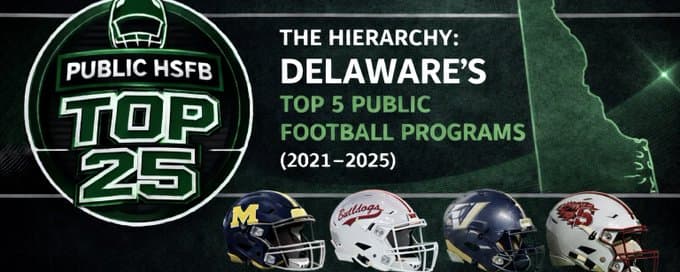
Delaware high school football is small in size but heavy in parity. With just three classifications (3A, 2A, 1A), the margins are thin — and unlike some larger states, private powers regularly take hardware off the table. That makes sustained public-school dominance even harder.
Series
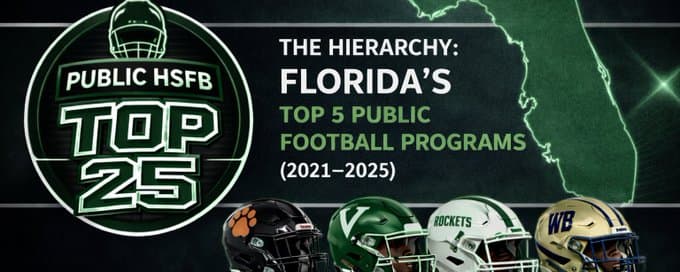
Florida isn’t just deep — it’s layered. From the Panhandle to Miami-Dade, every classification is loaded with Power 5 prospects, national schedules, and programs that expect to play in December. Add in the Metro/Suburba
Series
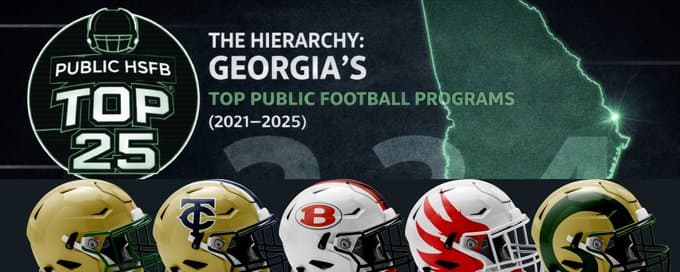
Georgia is one of the deepest football states in the country. With multiple classifications and true competitive balance across regions, sustained success here is difficult — especially in 6A and formally 7A.

Series
Hawaii high school football operates very differently than most states. Because the islands are geographically spread out and the total number of programs is relatively small, the regular season is organized through regional leagues, not large statewide classifications.
Series
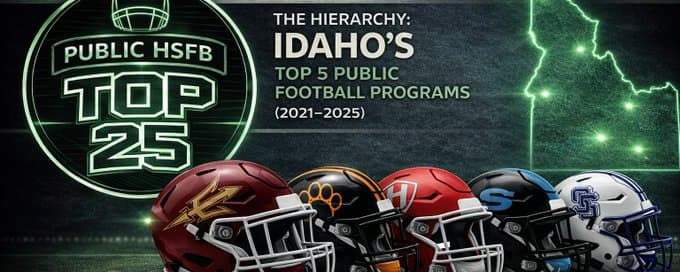
Idaho high school football has one of the most unique structures in the country. Because of the state’s rural geography and small-school enrollment base, 8-man football is extremely common. Under the current structure governed by the Idaho High School Activities Association:
Series
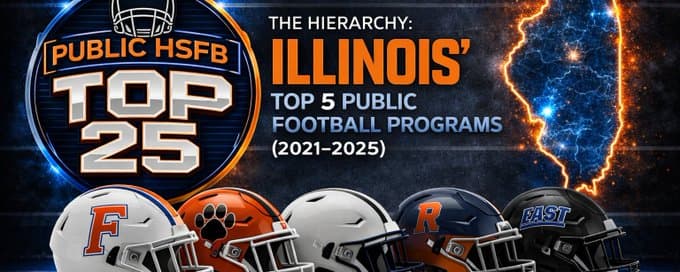
Illinois high school football operates within one of the most layered playoff systems in the country. Under the structure governed by the Illinois High School Association (IHSA), the state crowns champions across eight classifications (1A–8A). Enrollment determines placement, with the largest schools competing in 8A and the smallest in 1A.
Series
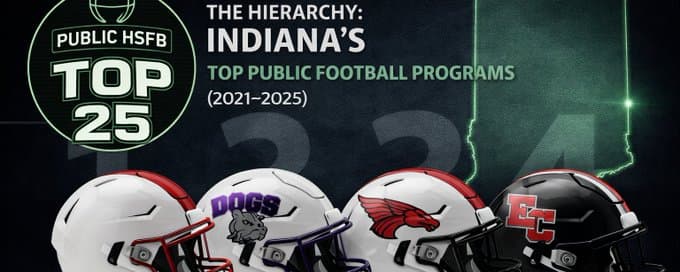
Indiana high school football has one of the cleanest postseason structures in the country. With a straight statewide bracket and all six state title games played at Lucas Oil Stadium, the résumé is easy to judge: championships first, title-game appearances next, then sustained deep playoff runs.

Series
Iowa high school football operates under one of the most distinctive playoff structures in the country. The state uses seven classifications (A–5A) with true statewide brackets culminating at the UNI-Dome in Cedar Falls, meaning every champion survives a full statewide gauntlet.

Series
Kansas high school football follows a straightforward postseason format with champions crowned across six classifications (6A–1A). While private powers like St. Thomas Aquinas and Bishop Miege often shape the statewide title picture, the public-school hierarchy from 2021–2025 was defined by a handful of programs that consistently reached championship games or stacked multiple state titles.
Series
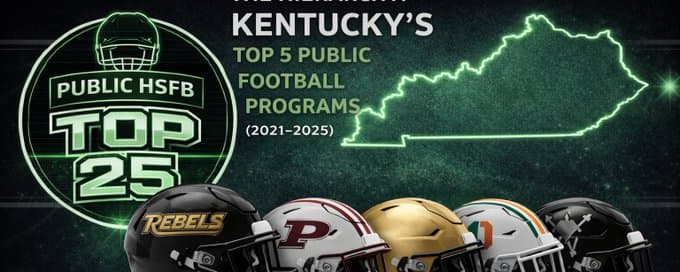
Kentucky high school football presents a unique landscape. Several classifications are frequently dominated by powerhouse private programs, meaning public schools often have to navigate deeper playoff paths to reach championship weekend.

Series
Public Schools Top 25 | National Series — Part 18/50 Louisiana high school football operates under one of the most unique postseason formats in the country. Beginning with the 2022 season, the Louisiana High School Athletic Association separated programs into Select and Non-Select divisions, largely splitting private schools from traditional public programs.
Series
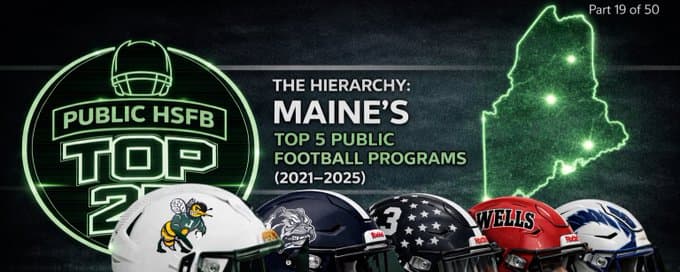
Public Schools Top 25 | National Series — Part 19/50 Maine high school football has one of the most unique structures in the country. Unlike most states that operate entirely within traditional 11-man football, a significant portion of Maine programs compete in 8-man football, which has become an important part of the state’s competitive landscape.
Series
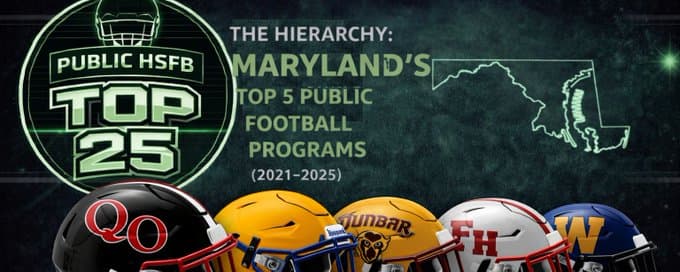
Public Schools Top 25 | National Series — Part 20/50 Maryland high school football has one of the most unique structures in the country, and before ranking the state’s top public programs of the last five seasons, it’s worth understanding how the system actually works.
Series
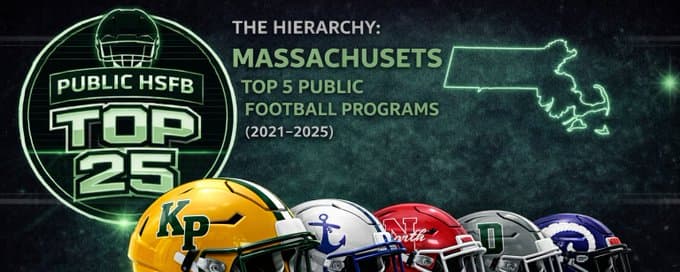
Public Schools Top 25 | National Series — Part 21/50 Massachusetts high school football operates under the Massachusetts Interscholastic Athletic Association (MIAA), which organizes teams into eight enrollment-based divisions. The classifications run from Division 1 through Division 8, with Division 1 representing the largest schools and Division 8 the smallest.
Series
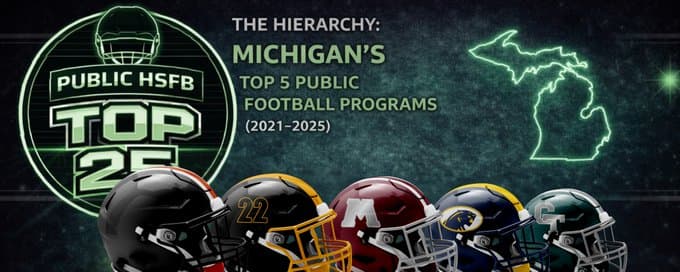
Public Schools Top 25 | National Series — Part 22/50 Michigan high school football operates under the Michigan High School Athletic Association (MHSAA) and uses a structure similar to what we saw in Massachusetts. The state is divided into eight enrollment-based divisions, ranging from Division 1 (largest schools) to Division 8 (smallest). Each division runs its own playoff bracket, and the season concludes with eight championship games played at Ford Field, home of the Detroit Lions.
Series
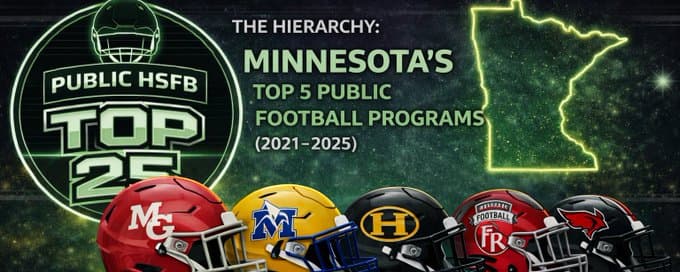
Public Schools Top 25 | National Series — Part 23/50 Ranking Minnesota proved to be one of the more challenging states in the series. Under the Minnesota State High School League system, the state crowns champions in seven classifications — 6A, 5A, 4A, 3A, 2A, 1A, and 9-Player — with all titles decided annually at the Prep Bowl. Class 6A includes only the 32 largest schools, while the remaining programs are divided by enrollment through 5A down to 1A (~48 per class), with the smallest schools competing in 9-Player football.
Series
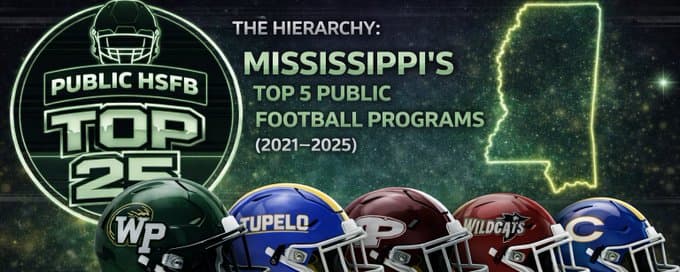
Public Schools Top 25 | National Series — Part 24/50 Mississippi was another difficult one to rank 1-5. At the top, you have programs that dominated week-in, week-out for five straight years. Then you have others that reached the highest peak possible — winning in the largest classification. And layered throughout is a major structural change: the introduction of 7A in 2023, which reshaped the top of the state.
Series
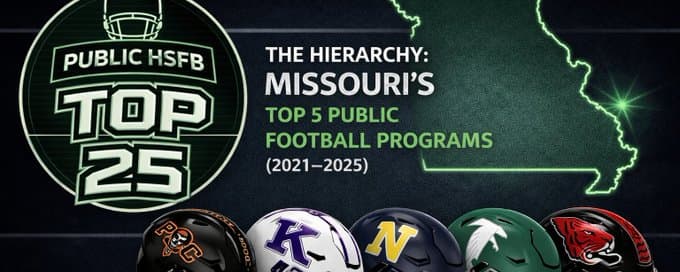
Public Schools Top 25 | National Series — Part 25/50 Missouri wasn’t overly difficult to rank—but it is one of the more interesting states to break down once you start factoring in how the system works. The state is split into: 6 classes of 11-man football (Class 1–6) 1 class of 8-man football In 11-man, most classes sit in the mid-50 team range, with Class 6 slightly smaller at around 40+ teams. The 8-man division also has roughly 40–45 programs, making it a significant part of the overall landscape.
Series
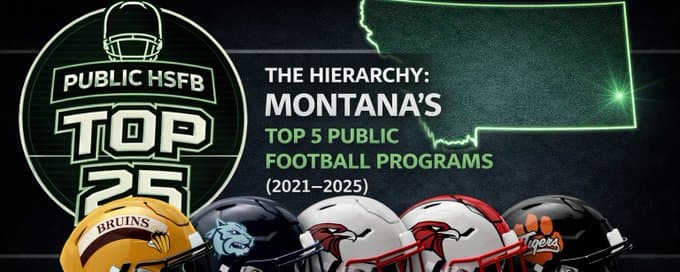
Public Schools Top 25 | National Series — Part 26/50 Montana is one of the cleaner states structurally — but once you really break it down, it becomes one of the more interesting evaluations in the country.
Series
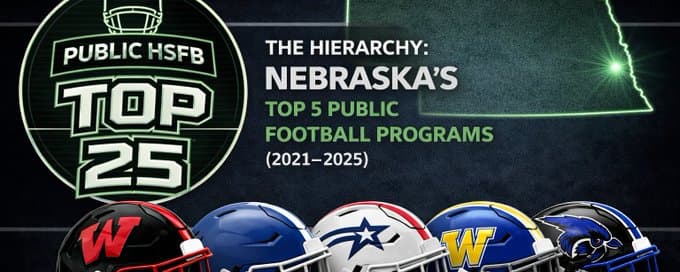
Public Schools Top 25 | National Series — Part 27/50 Nebraska high school football, governed by the Nebraska School Activities Association (NSAA), offers one of the most balanced and system-driven landscapes in the country.
Series
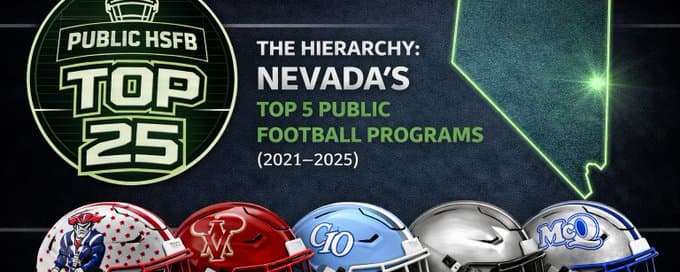
Public Schools Top 25 | National Series — Part 28/50 Nevada high school football, governed by the Nevada Interscholastic Activities Association (NIAA), has undergone constant structural change over the past five years — and none of it has been random.
Series
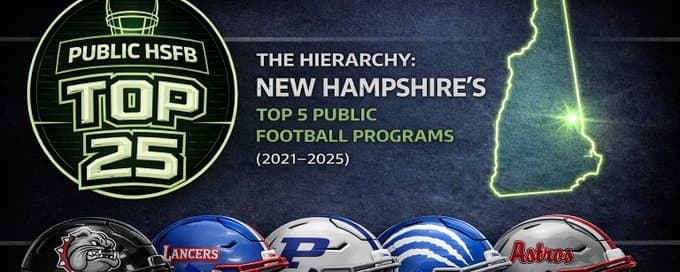
Public Schools Top 25 | National Series — Part 29/50 New Hampshire is one of the more straightforward states structurally—but once you get into it, there are a few unique quirks that matter a lot for rankings, especially when you’re comparing programs across divisions.

Series
Public Schools Top 25 | National Series — Part 30/50 I may be biased since this is the state where I played, but New Jersey has one of the best and most balanced playoff formats in the country.
Series
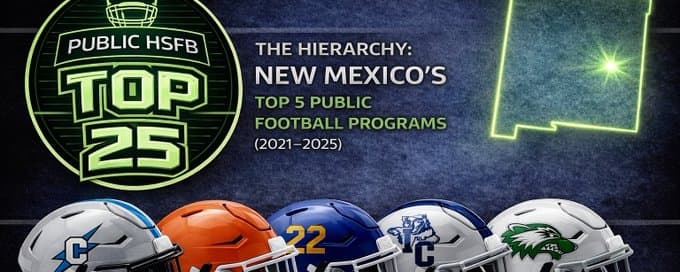
Public Schools Top 25 | National Series — Part 31/50 New Mexico is one of the more unique states in the country when it comes to high school football—and that plays a major role in how this list was built.
Series
New York might be the most complicated state in the entire country to evaluate. At first glance, it looks straightforward — the New York State Public High School Athletic Association (NYSPHSAA) crowns state champions across multiple classes.
Series
Public Schools Top 25 | National Series — Part 33/50 North Carolina high school football runs through the North Carolina High School Athletic Association (NCHSAA), which governs nearly every public program in the state.
Series
Public Schools Top 25 | National Series — Part 34/50 North Dakota high school football is one of the most unique landscapes in the country — not because of complexity, but because of how small, condensed, and uneven the structure is across classifications.
Series
Public Schools Top 25 | National Series — Part 35/50 Ohio turned out to be one of — if not the — hardest state to rank so far. It’s one of the states in the country that does not separate public and private schools, creating an extremely difficult path for public programs — especially in the higher classifications.
Series
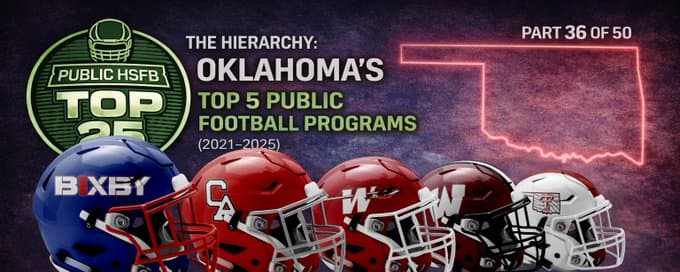
Public Schools Top 25 | National Series — Part 36/50 Oklahoma turned out to be one of the easier states to rank at the top, especially compared to Ohio. Ohio was difficult because public school dynasties were spread across the lower divisions, while the larger classification titles had to be weighed significantly more due to the path they had to go through, including major private schools.
Series
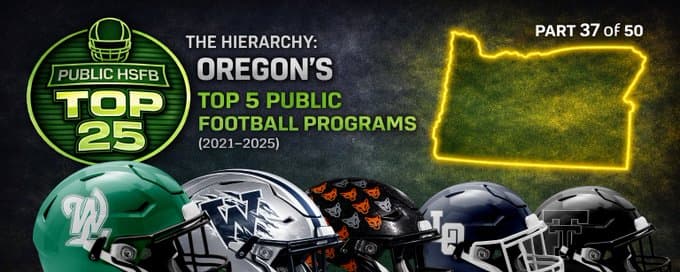
Public HSFB Top 25 | National Series — Part 37/50 Oregon turned out to be one of the more interesting states in this series because the OSAA playoff structure has evolved during this five-year window, especially at the top.

Series
Public HSFB Top 25 | National Series — Part 38/50 Presented in collaboration with @PA_TodaySports Pennsylvania turned out to be one of the most fascinating states in the entire series.
Series
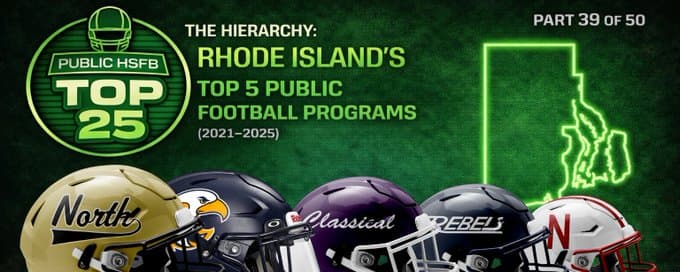
Public Schools Top 25 | National Series — Part 39/50 Rhode Island turned out to be one of the more unique states in this series.
Series
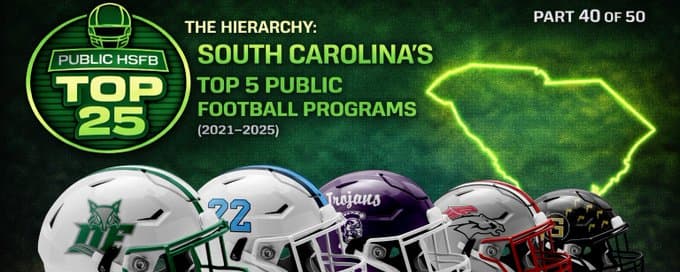
Public Schools Top 25 | National Series — Part 40/50 South Carolina turned out to be one of the cleaner states to rank at the top, but once you get past the obvious No. 1, there is still some real nuance.
Series
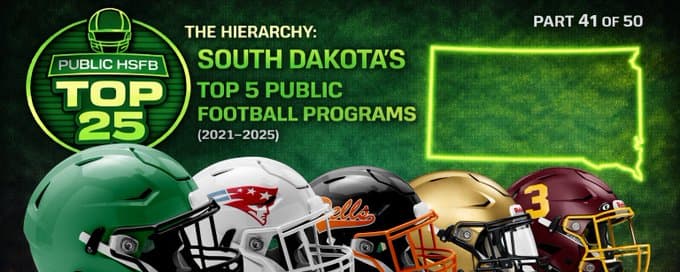
Public Schools Top 25 | National Series — Part 41/50 South Dakota was one of the more straightforward states to rank in this series because, unlike several others recently that we’ve covered, the overall playoff structure remained stable from 2021 through 2025. The state operates under the South Dakota High School Activities Association (SDHSAA) and uses a seven-class football system, split between 11-man and 9-man football.
Series
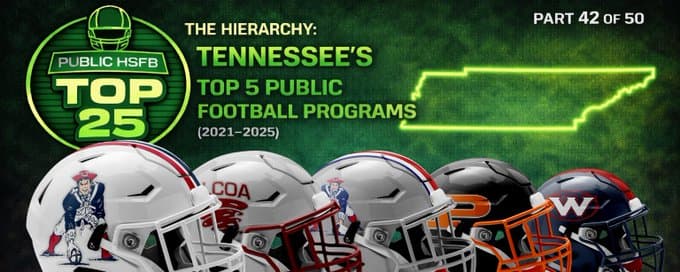
Public Schools Top 25 | National Series — Part 42/50 Tennessee turned out to be one of the clearer states to rank at the very top, even though the battle for the final few spots was much tighter than it first appears.
Series
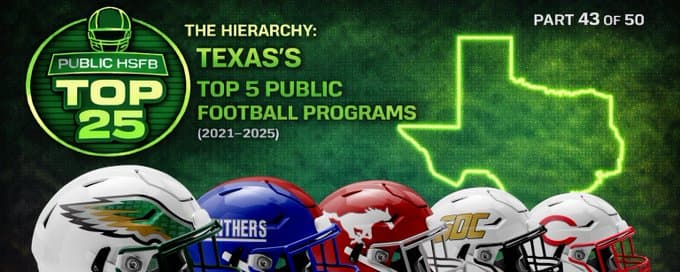
Public Schools Top 25 | National Series — Part 43/50 Texas high school football is the biggest stage in America. Many argue that no state carries more weight, more tradition, or more national-caliber programs than Texas, and that made this one of the biggest articles in the entire 50-state series.
Series
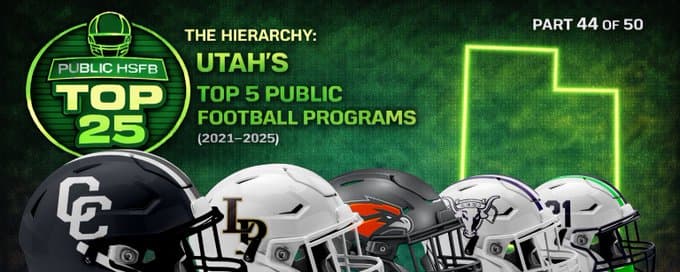
Public Schools Top 25 | National Series — Part 44/50 Utah turned out to be one of the more fascinating states in this series because the story is split between clear dominance at the top and a very competitive battle for the remaining spots.

Series
Public Schools Top 25 | National Series — Part 45/50 Vermont turned out to be one of the more interesting states in this entire 50-state series — not because of a complicated playoff structure, but because of the public vs. independent school distinction.
Series
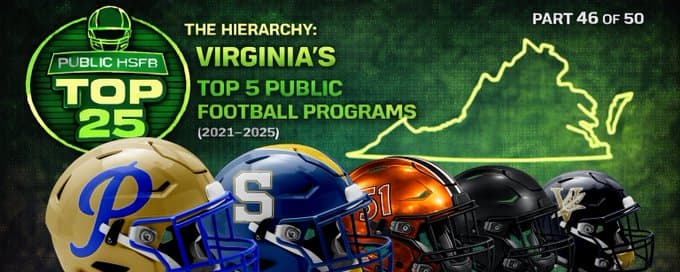
Public Schools Top 25 | National Series — Part 46/50 Virginia turned out to be one of the best debates in this entire 50-state series.
Series
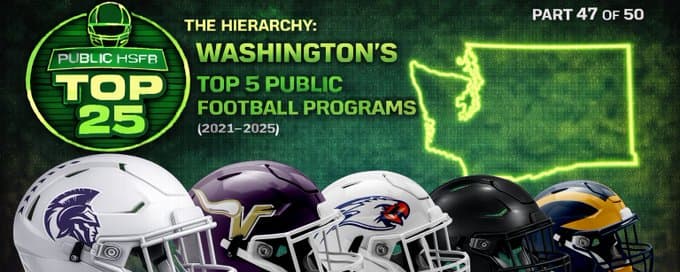
Public Schools Top 25 | National Series — Part 47/50 Washington turned out to be one of the more fascinating states in this entire series because it gives you elite big-school public powers at the top, a historic 1A dynasty, and — just like several of the toughest states we’ve covered — public and private schools all competing in the same playoff brackets.
Series
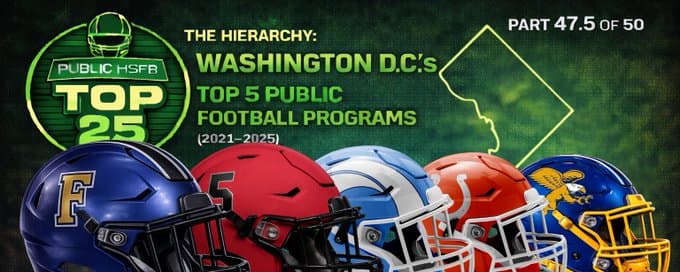
Public Schools Top 25 | National Series — Part 47.5/50 Washington, D.C. is one of the most unique stops in this entire series, which is exactly why it earned its own bonus edition: Part 47.5/50. Even though D.C. is not technically a state, the football landscape here is strong enough — and structurally different enough — that it absolutely deserved its own ranking.
Series
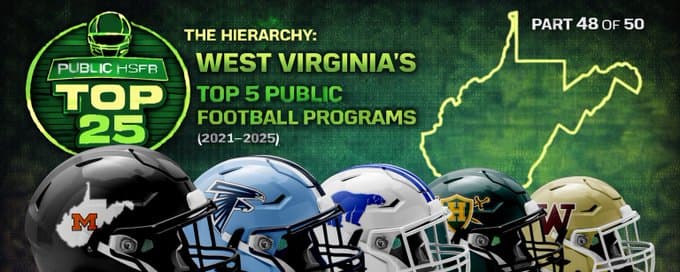
Public Schools Top 25 | National Series — Part 48/50 West Virginia high school football has gone through one of the more notable structural changes of any state over the past five years.

Series
Public Schools Top 25 | National Series — Part 49/50 Wisconsin high school football has one of the cleanest postseason structures in the country, and it made this one of the most fascinating states to rank.
Series
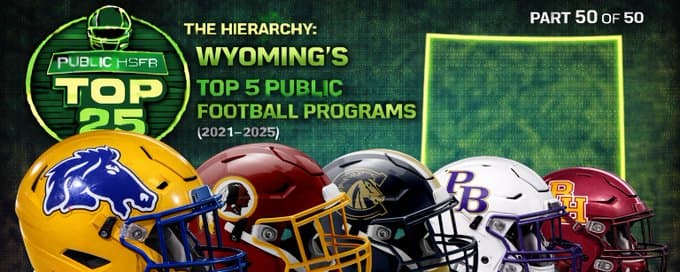
Public Schools Top 25 | National Series — Part 50/50 Fifty states. Fifty(and a half) deep dives. And now we're onto our last state of the series! This has been an incredible journey across every corner of the country, breaking down playoff structures, verifying champions, weighing classification strength, and ranking the top public high school football programs of the past five years.

Series
Public Schools Top 25 | National Series — Edition 52: National Top 40 Section 1 - Honorable Mentions + #26-#40 After ranking every state and Washington D.C., it’s finally time to zoom out and look at the full national picture. This list was not built off hype, recruiting stars, or one magical season. It was built the same way the full 50-state series was built:

Series
Public Schools Top 25 | National Series — Part 53: National Top 40 Section 2/3 - #25-#11 Now the list enters the heavyweight tier. These are the programs that either stacked major hardware, lived in state title games, or proved themselves in football-rich states and top classifications where the path itself becomes part of the résumé.

Series
Public Schools Top 25 | National Series — Part 54: National Top 40 Section 3/3 - Top 10 These are the ten programs that built the strongest public-school résumés in the country from 2021 through 2025 — not just by winning, but by where they won, how often they got back, and how much weight those championships carried.